
A report by the Association for Democratic Reforms (ADR) reveals that 102 re-elected Members of Parliament experienced an average asset growth of over 100% between 2014 and 2024. The report highlights the MPs with the highest asset increases.

The total assets of the country's sitting legislators amount to Rs 73,348 crore, which is more than the combined annual Budgets (2023-2024) of Nagaland (Rs 23,086 crore), Tripura (Rs 26,892 crore), and Meghalaya (Rs 22,022 crore), totaling around Rs 72,000 crore.
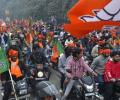
A report by the Association for Democratic Reforms (ADR) reveals that the BJP declared the highest income among national parties in FY 2024-25, while the Congress's income declined.

'The most enduring part of Satheesan's personality is he is good at heart. That is the reason why everybody, from the old to small children, get attracted to him.'
Analysis of election expenditure reports reveals Congress spent more on propaganda and social media, while BJP's overall expenses were higher in the Delhi assembly elections.
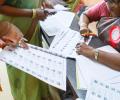
The Supreme Court of India resumed hearing petitions challenging the Special Intensive Revision of electoral rolls in Bihar, addressing the use of Aadhaar and concerns about voter deletions.

The Supreme Court has directed the Election Commission to address typographical errors and other mistakes in the final Bihar electoral roll. The court will hear further arguments on November 4.

A report by the Association for Democratic Reforms (ADR) reveals that a significant number of registered unrecognised political parties in Bihar have not made their mandatory financial disclosures public for 2023-24.

33 candidates face cases of murder, 86 candidates face cases related to attempted murder, 42 candidates have cases related to crimes against women with two of them facing rape cases.

Reiterating Sitharaman's statement that this is a youth power budget, Modi emphasised that the provisions made in the budget will prepare leaders, innovators and creators across different sectors.

In terms of MLA salaries, Odisha is followed by Telangana (about Rs 2.7 lakh), Maharashtra (Rs 2.6 lakh), Manipur (Rs 2.5 lakh), and Uttar Pradesh (Rs 2.4 lakh).

Association for Democratic33 per cent of 4,092 sitting MLAs were non-graduates.
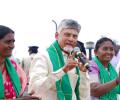
The CMs with lowest assets are West Bengal CM Mamata Banerjee with assets worth over Rs 15.38 lakh, Omar Abdullah, CM of Jammu and Kashmir, with assets worth over Rs 55.24 lakh, and Kerala CM Pinarayi Vijayan, who has assets worth Rs 1.18 crore.

Madhya Pradesh and Chhattisgarh (Phase II) go to the polls on Friday, November 17, 2023.

Total assets of the 699 candidates are worth about Rs 3,952 crore...

The Bharat Rashtra Samithi has fielded 114 crorepati candidates followed by the Congress (111), the Bharatiya Janata Party (93) and 30 by the Bahujan Samaj Party.
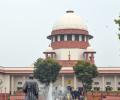
The Supreme Court is scheduled to hear on March 18 a plea seeking to debar from polls, candidates charged with serious offences. The plea, filed by advocate Ashwini Kumar Upadhyay, seeks directions to the Centre and the Election Commission of India (ECI) to restrain such candidates put on trial for serious offences. The plea alleges that despite recommendations of the Law Commission of India and court's previous directions, the Centre and the ECI did not act. The plea also highlights the increasing number of MPs with declared serious criminal cases since 2009, with one MP declaring 204 criminal cases against him, including culpable homicide, house trespass, robbery, criminal intimidation, etc. It claims that political parties are competing with each other in a race to the bottom as they couldn't afford to leave their competitors free to recruit persons with criminal antecedents.
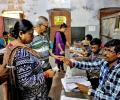
The Supreme Court has requested the Election Commission to respond to petitions challenging the Special Intensive Revision of electoral rolls in Tamil Nadu and West Bengal. The court has also asked the Madras and Calcutta High Courts to keep proceedings on similar petitions in abeyance.
Trinamool Congress leader and Member of Parliament Mahua Moitra has moved the Supreme Court challenging an order of the Election Commission of India for special intensive revision of electoral rolls in Bihar.

The Congress has fielded 121 candidates with declared criminal cases and 61 with serious criminal cases.
The Election Commission defended its Special Intensive Revision (SIR) exercise for Bihar's voter list in the Supreme Court, calling it accurate and dismissing allegations of impropriety by political parties and NGOs.

The polling for 230 seats for Madhya Pradesh and 70 seats in the second phase of Chhattisgarh will be held on Friday, November 17, 2023.
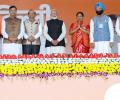
Five of the seven newly sworn-in ministers in Delhi, including the chief minister, have declared criminal cases against themselves, while two are billionaires, according to the Association for Democratic Reforms (ADR). The findings are based on self-sworn affidavits submitted by the ministers ahead of the 2025 Delhi Assembly Elections. The report highlights that five ministers, including Chief Minister Rekha Gupta, have declared criminal cases against themselves, with one minister, Ashish Sood, facing serious criminal charges. On the financial front, two ministers are billionaires, with Manjinder Singh Sirsa having the highest declared assets worth Rs. 248.85 crores and Kapil Mishra having the lowest at Rs 1.06 crores. The average assets of the seven ministers stand at Rs 56.03 crores. All seven ministers have declared liabilities, with Parvesh Sahib Singh having the highest at Rs 74.36 crores. Six ministers have declared educational qualifications of graduate level or above, while one has completed only the 12th standard. Five ministers are between 41 and 50 years old, while the remaining two are aged between 51 and 60 years. The cabinet includes only one woman minister, the chief minister.

The third and final phase of the three phase Jammu and Kashmir assembly elections will be held on Tuesday, October 1, 2024.
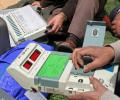
The Supreme Court of India dismissed a plea seeking a directive for 100% manual counting of Voter Verified Paper Audit Trail (VVPAT) slips in addition to electronic counting. The court cited its previous rulings on the safety and security of Electronic Voting Machines (EVMs) and stated that the issue was not open for reconsideration. The plea argued for a modified VVPAT system where voters could verify printed ballots before leaving the polling station, and for 100% manual counting of VVPAT slips. The court upheld the Delhi High Court's decision dismissing the plea, referring to previous Supreme Court judgments on the matter.

The second phase of the three phase Jammu and Kashmir elections will be held on Wednesday, September 25, 2024.

Polling for the 90 seats of the Haryana assembly will take place on Saturday, October 5, 2024.

Of the 695 candidates in the fray, 88.2 per cent or 613 candidates are male candidates.

It also aims to reduce the powers of the Supreme Court, with some authorities shifted to the proposed Constitutional Court, and immunity to the president from criminal proceedings for life.

The Congress followed next with Rs 620 crore or 18.5 percent of the total expenses among the 32 national and regional parties whose records were analysed, the ADR said.

Of the 904 candidates, 89.49 per cent or 809 candidates are male candidates. 10.51 per cent or 95 candidates are women candidates in the final phase.

An analysis of the affidavits of all the 90 winning candidates by the Association for Democratic Reforms and Haryana Election Watch show a slight rise in the number of crorepati MLAs, from 93 percent in 2019 to 96 percent this time.

The first phase of the three phase Jammu and Kashmir elections will be held on Wednesday, September 18, 2024.

The Supreme Court has directed the Bihar State Legal Service Authority to assist voters excluded from the final electoral rolls in filing appeals with the Election Commission.

The Supreme Court has directed the Election Commission to provide details regarding the approximately 65 lakh voters removed from the draft electoral rolls in Bihar, a state preparing for elections. The court's order comes in response to a petition filed by an NGO challenging the Election Commission's Special Intensive Revision of electoral rolls.

The Delhi Assembly elections saw BJP's Karnail Singh emerge as the richest winner with assets worth Rs 259 crore, Umang Bajaj at 31 as the youngest winner, Tilak Ram Gupta as the oldest contestant at 73, and AAP's Amanatullah Khan the candidate with the highest, 19, criminal cases. Several winning candidates have pending criminal cases, according to a report by the Association for Democratic Reforms.

Polling for the Delhi assembly's 70 seats will be held on Wednesday, February 5, 2025.

The sixth phase of the Lok Sabha elections for 58 seats will take place on Saturday, May 25, 2024, covering 8 states.
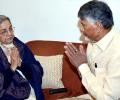
According to a report by the Association for Democratic Reforms (ADR), Andhra Pradesh Chief Minister N Chandrababu Naidu is the richest chief minister in India with assets worth over Rs 931 crore, while West Bengal's Mamata Banerjee is the poorest with just Rs 15 lakh. The average asset per chief minister is Rs 52.59 crore, and the total assets of 31 chief ministers are worth Rs 1,630 crores. The report also highlights that 13 chief ministers have declared criminal cases against themselves, with 10 of them having declared serious criminal cases.

Gitanjali Angmo, wife of climate activist Sonam Wangchuk, has filed a plea in the Supreme Court seeking his release from detention under the National Security Act. Wangchuk was detained following protests in Ladakh. The plea challenges his detention and alleges violations of due process.
